By wildlife carer Kellie, Tasmania Wildlife Hospital volunteer
Earlier this year, a young female Tasmanian devil came into our care after being hit by a car on the East Tamar Highway. She weighed just 1.8 kilos. Frightened and clearly in pain, she suddenly found herself in a strange place that looked, sounded and smelled nothing like home.
What followed was more than five months of care, and like any Tassie devil, she had something to say about all of it.
A rough start
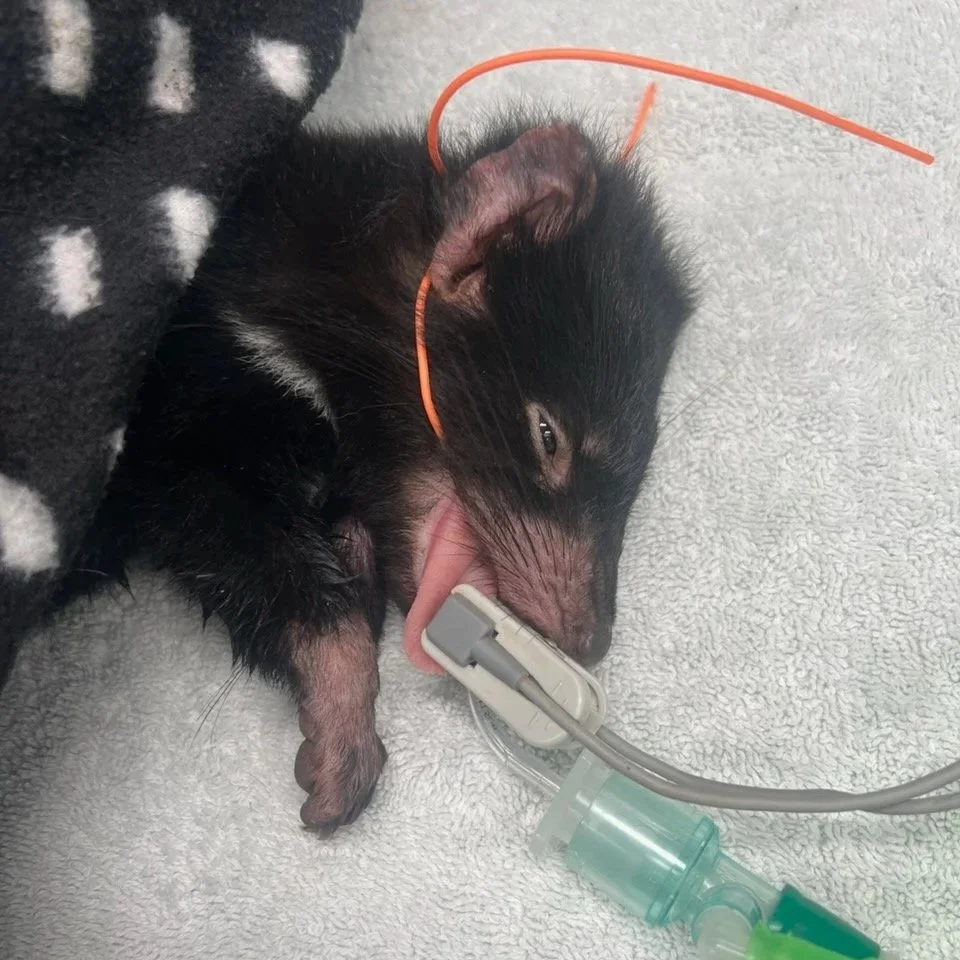
The first report suggested she had a fractured skull. When our veterinary team assessed and X-rayed her, they found a fractured jaw and a broken tooth. For an animal whose whole life depends on that famously powerful bite, it was a serious injury. She was also severely dehydrated, so she was given intravenous (IV) fluids and anti-inflammatories straight away, then admitted for ongoing treatment, care and monitoring.
Those early days certainly weren’t without their challenges! Even sore, tired and far from home, she tried her best to chew through her IV line, day after day, as if to tell us she’d much rather be somewhere else, thank you very much. It was our first glimpse of the spirited little devil we’d come to know so well.
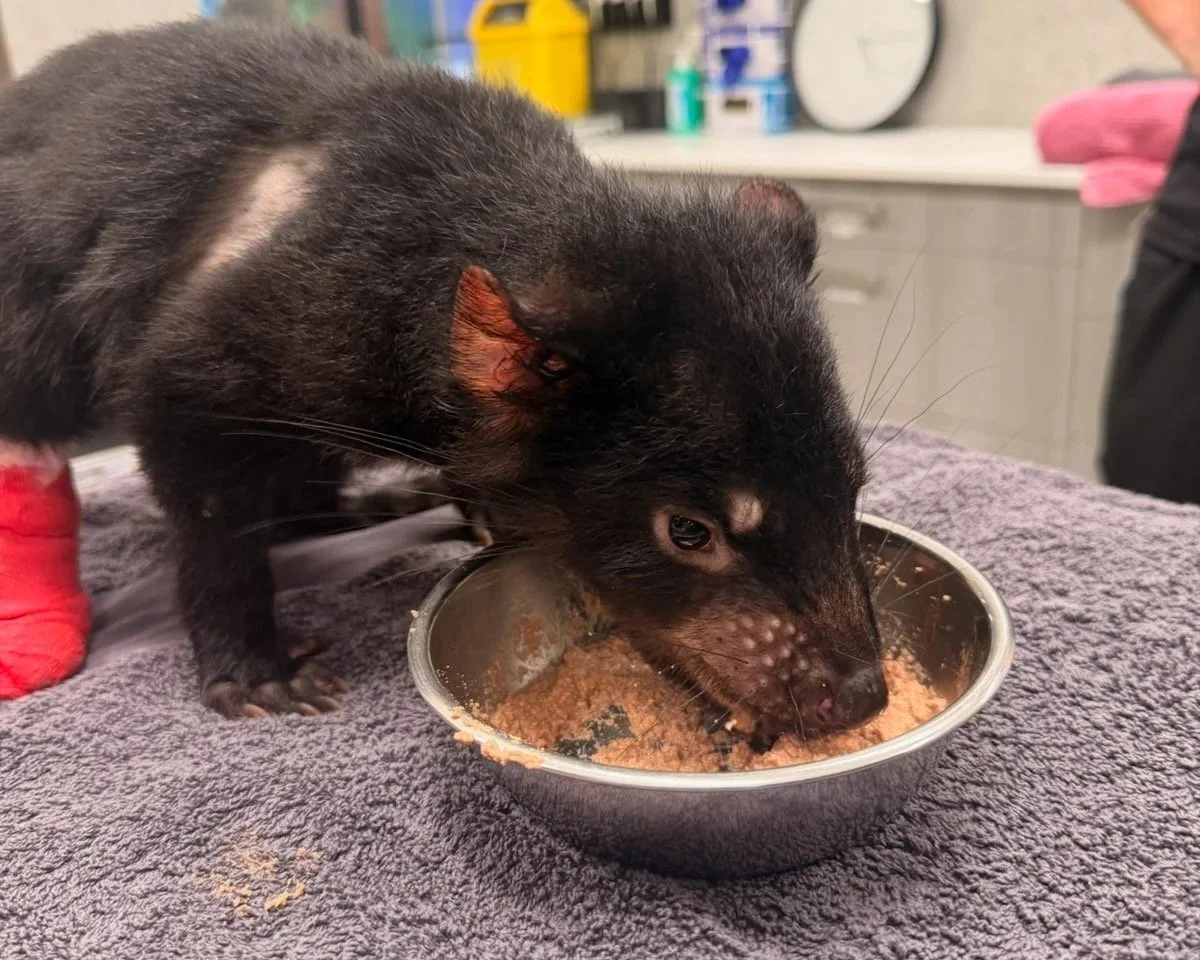
Once she was stable, we moved her onto small amounts of soft, mushy food. Slowly and carefully, and perhaps a little warily at first, she began eating again on her own.
The waiting game
Her road to recovery was always going to take time. The broken tooth couldn’t be safely removed until her jaw had completely healed, so for weeks she stayed on a soft-food diet while the fracture slowly mended.
Waiting was not her strong suit.
As the pain eased, her strength and curiosity came flooding back, and it seemed hospital life was becoming a little too boring for her! She investigated everything, nose first. Clearly, she had places to be. It was exactly the sign we’d hoped for, and she was ready for the next stage of her rehabilitation: a larger enclosure with more room to explore.
Her new space brought out even more of her natural behaviour, and before long she was chewing on anything she could get her teeth into. Not long before, she couldn’t eat on her own. Now she was gnawing with gusto, as though she’d just remembered what that devil jaw was for. After everything she’d been through, it was lovely to see.
Anyone who has cared for a devil will know that cleaning day is quite an experience. To us, a freshly cleaned enclosure looks lovely and smells wonderfully clean. To a devil, it’s suddenly a completely different place, as if someone has been through her home and moved everything around. She would spend ages investigating, checking what had changed and making sure all her familiar smells were still there. Quite often, the food we’d carefully put out for her sat completely forgotten while she finished her inspection.
She certainly kept us on our toes, and reminded us that looking after a Tasmanian devil involves plenty of patience, a bit of problem-solving and a good sense of humour!
Surgery, and starting again
Several months later, follow-up X-rays brought the news we’d all been waiting for: her jaw had healed completely. It was time to tackle the next stage of her treatment, removing the damaged tooth in a 45-minute surgical procedure.
Once again, she needed time to recover. She went back onto soft food while the extraction site healed, and this time we made sure she had plenty to keep her busy. Enrichment became a big part of her day, encouraging her to eat, keeping her mind occupied and helping her build the natural behaviours she’d need back in the wild.
Her favourite by far was a hard-boiled egg with the shell still on. It was a puzzle and a prize in one: she had to work out how to break through the shell before she could get to the good part inside. We also got creative, hiding her food inside pillowcases and tucking it into different spots around her enclosure, so she had to use her nose and forage for every meal, just as she would in the bush.
She had a personality all her own, too. One of her favourite pastimes was tipping her water bowl upside down and flooding her enclosure, and then, we’re quite sure, looking very pleased with herself. After a few too many watery surprises, we gave her heavy cement water bowls that were too substantial for her to turn over. We like to think she was a little disappointed.
What it takes
Caring for a wildlife patient over several months involves much more than the rescue and the first round of treatment. There’s housing, feeding and daily care, along with veterinary assessments, X-rays, medications, fluids, surgery and all the supplies needed throughout rehabilitation.
Every extra week in care adds to the cost.
Her journey is a wonderful example of the commitment and resources it takes to give injured wildlife the best possible chance of returning to the wild.
Learning to be a devil again
Getting her home meant more than letting her injuries mend. She needed to regain the skills and strength to eat the way a Tasmanian devil should: crunching, tearing and chewing through bone.
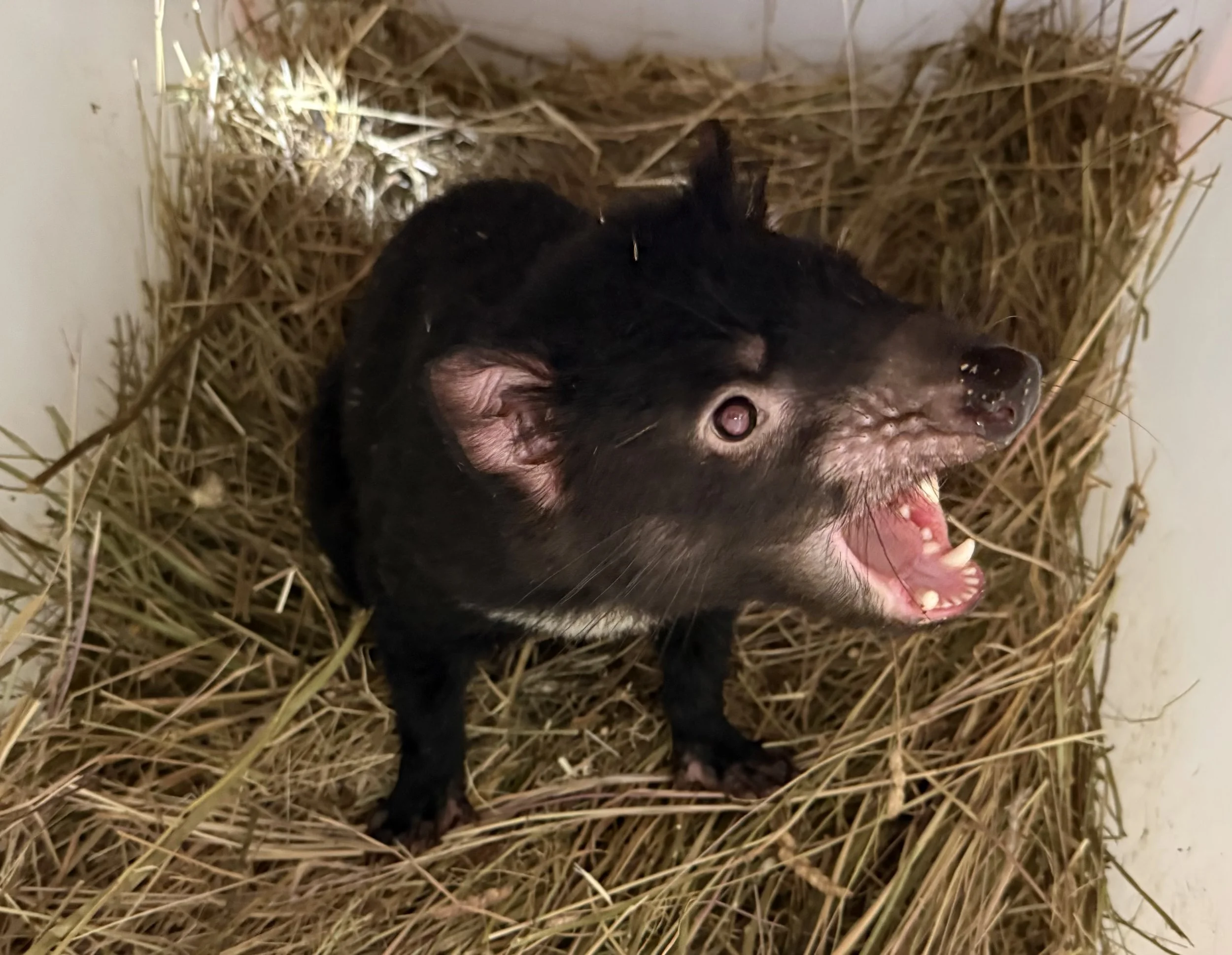
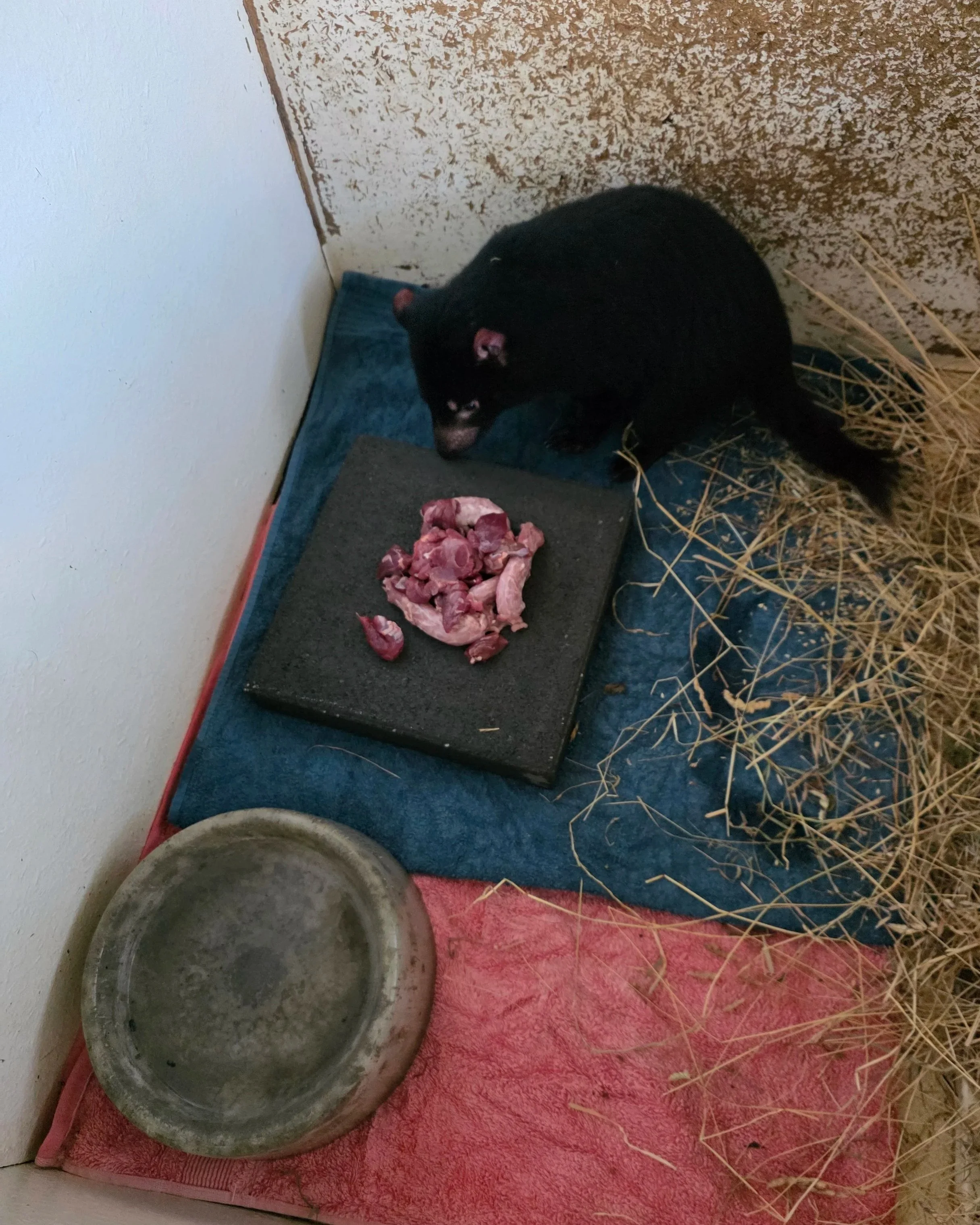
Once her mouth had healed, we gradually moved her from soft food to chicken necks, giving her the chance to learn to chew through bone again. Over time she progressed to larger bones with meat still attached. Every crunch was a small victory, and with each one she seemed a little stronger and a little more sure of herself.
Then she reached the milestone we’d all been working towards: she was eating just as a healthy wild devil should. We could finally begin planning her return to the wild.
The little girl who had arrived at just 1.8 kilos had grown to a healthy 4.6 kilos. Before her release, she was microchipped, so she can be identified if she’s ever found again.
Going home
After more than five months in care, the day we had all been working towards finally arrived. She was ready to go home.
Her release was an incredibly happy occasion, and a very emotional one for those of us lucky enough to be there. After months of caring for her, watching her recover, celebrating her milestones and getting to know her cheeky little personality, it was hard not to become attached. Saying goodbye was bittersweet, but seeing her healthy, strong and ready to return to the wild was everything we had hoped for.
From a frightened, severely dehydrated little girl who needed help with every meal, to a strong, healthy Tasmanian devil ready to fend for herself, she had come such a long way. We like to think that as she headed back into the bush, she knew exactly where she was going.
Her journey is a reminder that wildlife rehabilitation isn’t always a quick process. Sometimes it takes months of treatment, careful monitoring, patience, creativity, financial support and lots of little milestones before an animal is ready to go home.
We wish this beautiful girl all the very best in the Tasmanian bush, where she belongs.
She was never just a patient
She was curious, stubborn, cheeky and determined, with a personality all her own. Every one of the more than 1,200 native animals seen at our hospital each year is an individual too. Each one arrives hurt and frightened, relying on the care our hospital team and volunteers provide every day of the year.
Our new dedicated wildlife hospital is being built for patients just like her. It will have CT imaging to give our vets the full picture of complex injuries like a fractured jaw, a dedicated predator ward designed around the needs of animals like devils, and spaces for every stage of rehabilitation, from the first critical days to the final weeks before release.