
A new dedicated hospital built for Tasmania’s wildlife
Every injured devil, wombat, eagle or possum deserves access to an experienced vet, a warm bed and a second chance in the wild.
For the north and north-west, we're building them a new dedicated wildlife hospital for exactly that!
Construction starts this November. We still need $75,000 to help finish and equip it.
Tasmania's wildlife is part of what makes this place home. Eagles gliding high above our hills, wallabies emerging from the bush at dusk, a possum peering down from a backyard tree. Many of the species we share our island with are found nowhere else, and they all deserve a place in our island's future.
Caring for them brings people together. Every injured, sick or orphaned animal that reaches us was helped by someone: a community member, a rescuer, a wildlife carer, a volunteer or a veterinary team.
Since 2023, with the generous support of Forth Valley Vet Clinic, we've given those animals free veterinary care. In that time, we've treated X native animals. The need keeps growing, and much of this work happens quietly, without government funding.
Construction on our new dedicated hospital starts in November 2026. It will give that care a lasting home across Tasmania's north and north-west, for generations to come.
-
It takes a village to care for our wildlife. Every injured native animal that reaches us is helped by someone, a community member, a rescuer, a wildlife carer and our vet and volunteer team.
Since 2023, with the generous support of Forth Valley Vet Clinic, we have provided free veterinary care for our wildlife. We have also supported the wider wildlife rehabilitation network.
Forth Valley Vet Clinic's veterinary team, equipment and support systems have made that work possible. Alongside them, our volunteers, wildlife carers, rescuers, donors and partners have helped us establish a service that continues to grow.
Much of that contribution happens quietly, without government funding: caring for animals through veterinary treatment and rehabilitation, observing their progress, raising funds, helping with administration and sharing our work with the wider community.
Construction has recently commenced on our new, dedicated wildlife hospital. More space and additional equipment will help us meet the ever growing patient caseload.
What we establish together, now, will be here for the next generation of people who stop to help, choose to volunteer or dedicate their lives to caring for our wildlife.
Meet [name]
[Name], a [species], came to us in [month, year] after [what happened, e.g. being hit by a car near Ulverstone]. [Their injury, in plain words.]
Our vets [what they did: diagnosis, surgery, treatment]. Then came [X weeks] of recovery: [one or two specific details, e.g. hand-feeding, building flight strength].
[What the new hospital will add for animals like [name], e.g. a habitat room to rebuild flight strength, or CT on site.]
On [date], [name] went home to the wild. [Release detail: where, and who was there.]
The new hospital means more animals like [name] get that second chance, with the space, quiet and equipment they need.

YOUR NEW DEDICATED WILDLIFE HOSPITAL
Giving sick and injured wildlife the future support they need
Helping injured wildlife successfully return to their wild home is the hope and commitment behind our work. Reaching that point can take veterinary treatment, surgery, careful monitoring and often months of rehabilitation, with many people contributing along the way.
Our new dedicated wildlife hospital builds on the strong foundations of that shared effort. The hospital will give more native animals the space, quiet and care they need to make their journey home.
Their surroundings matter. Every space is designed around what native wildlife need to recover:
Treatment and surgery areas: Dedicated spaces to examine, treat and operate on injured patients. These space also provide room to grow as the need for wildlife care continues to increase.
Two intensive care and hospital wards: A quiet place for animals in their most critical days, with close observation and ongoing care.
Separate predator and prey wards: Unfamiliar sights, sounds and other species can be stressful for wildlife. Separate wards let predator and prey species rest apart, so a recovering pademelon can settle without the sound or scent of a quoll nearby.
Habitat room for large birds of prey: Space suited to eagles, owls and goshawks to enhance recovery and rebuild their strength on their road to recovery.
Quarantine: To help ensure every animal in our care is protected and safer from suspected infectious illness.
Medical imaging: CT Scanner, X-ray and ultrasound under one roof (more below).

We hope our new dedicated wildlife hospital will help strengthen the part we play in that shared effort. For the carers and rescuers who bring wildlife to us, and the community who make this work possible, the hospital will be a shared resource they can turn to for years to come.
Take a closer look at the hospital plans
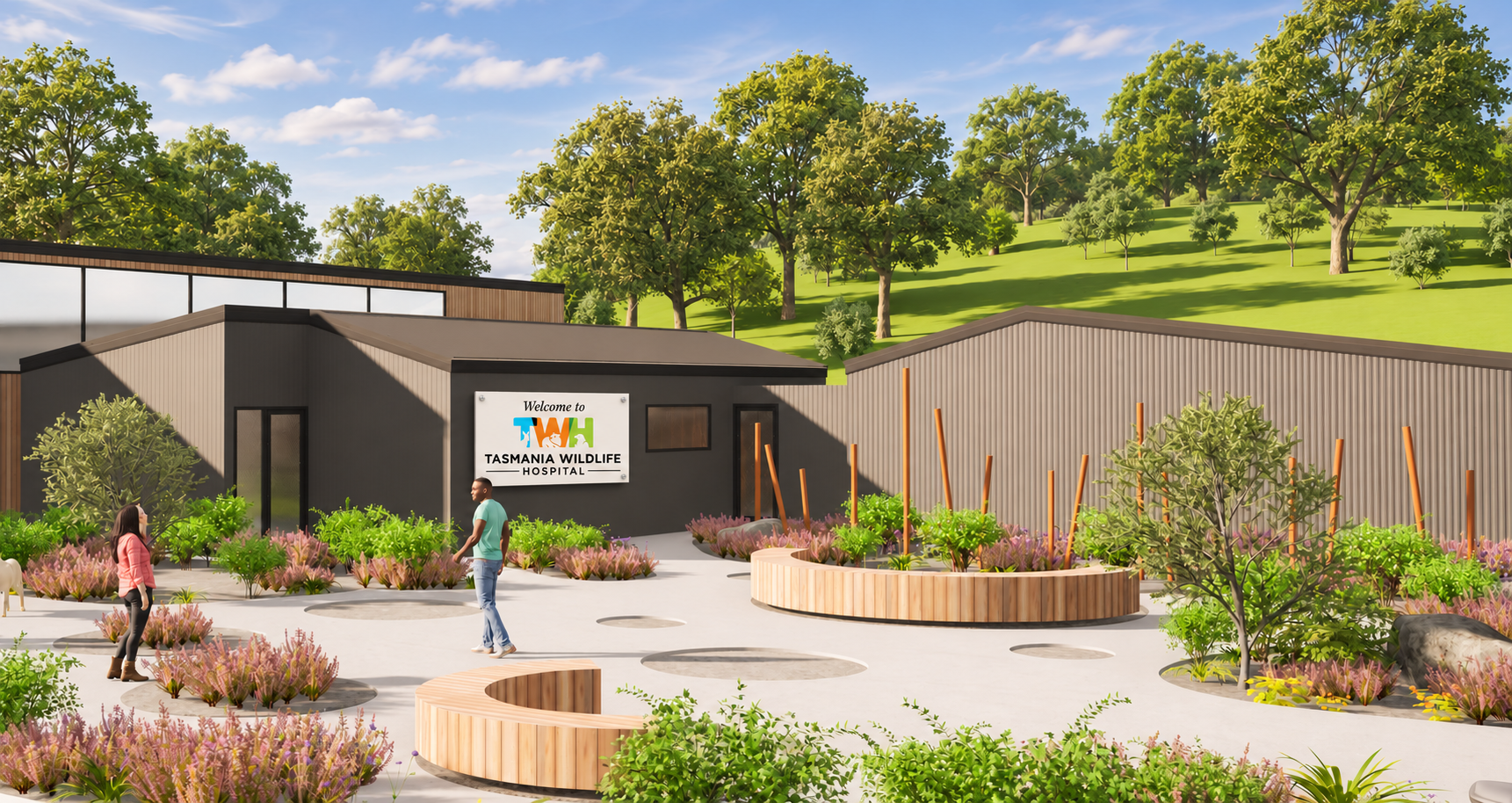
Artist’s impression of the dedicated wildlife hospital. Landscaping is illustrative.
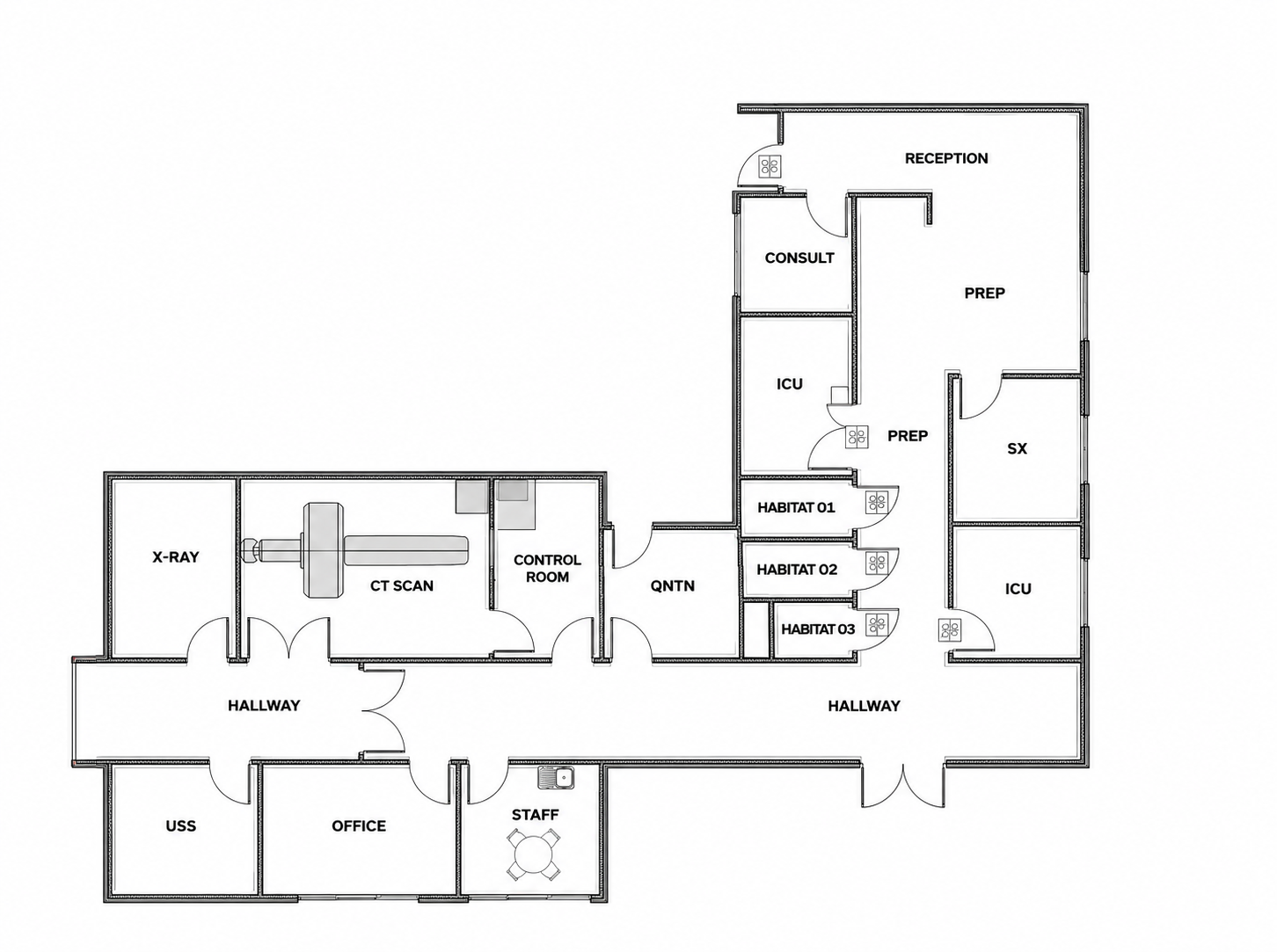
Floor plan: our consultation, treatment, ICU, recovery and medical imaging spaces.
ADVANCED CT SCANNER IMAGING FOR WILDLIFE AND DOMESTIC PETS
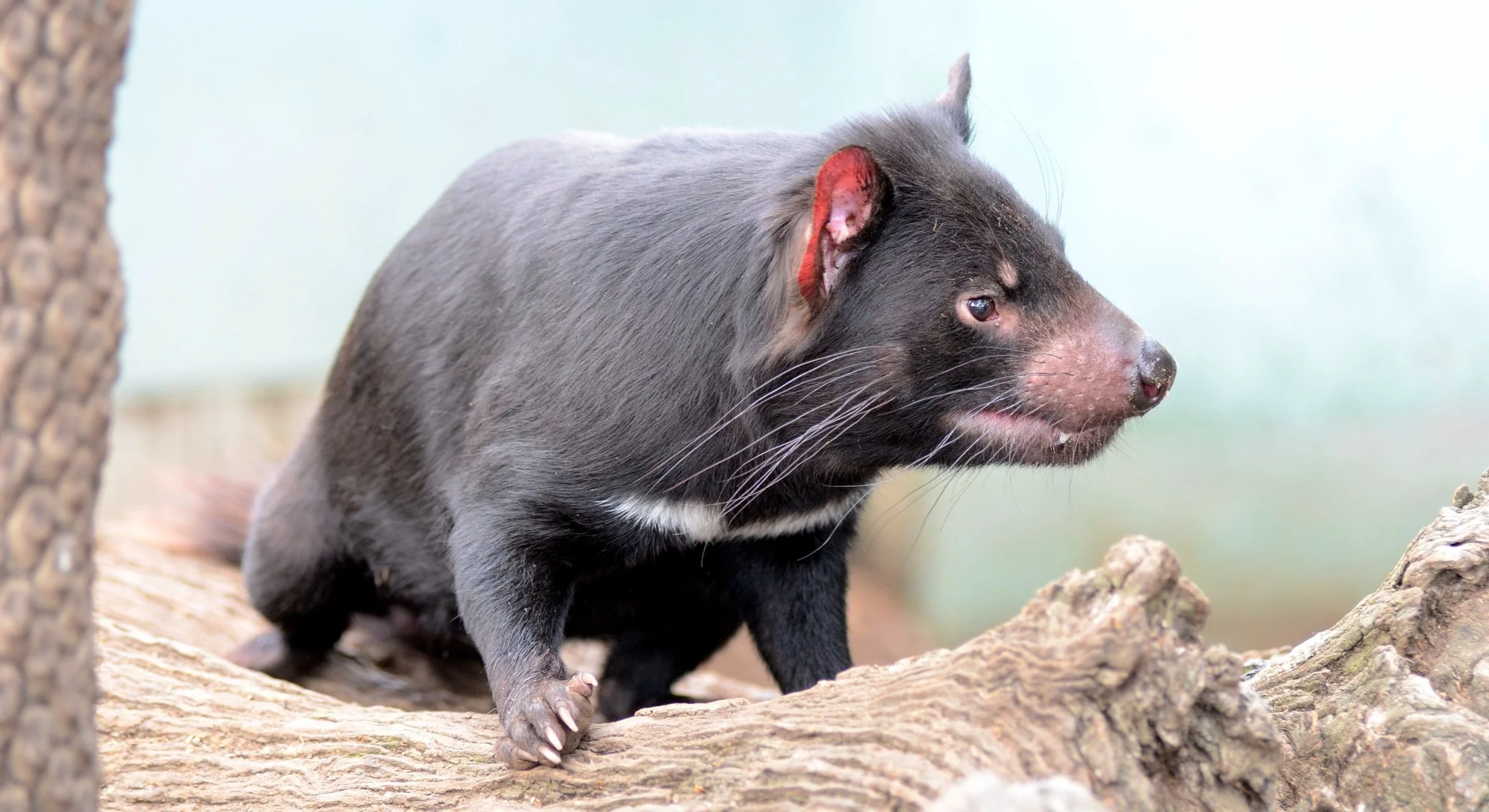
A deeper understanding of their injuries can help change futures
An X-ray shows a lot, but not everything. As part of our new wildlife hospital, we are also building a dedicated imaging suite which will house a CT scanner adding advanced imaging to provide a more detailed view of wildlife injuries and a deeper understanding of what treatment and recovery may involve for our wildlife patients.
Tasmania Wildlife Hospital will be providing the first CT Scanner freely available for our wildlife in the North and Northwest coast. Alongside X-ray and ultrasound for imaging diagnostics.
CT can reveal internal injuries and the complexity of fractures in greater detail, helping our vets plan treatment, surgery and rehabilitation around each patient's needs.
For native wildlife, that detail matters!
It can help our team assess whether a patient could recover the movement and function needed to live independently in the wild. Those decisions carry the hope behind our work, alongside our responsibility for the wellbeing of every patient. Native wildlife in our care will receive CT scans free of charge when our vets determine they are needed.
Caring for your pets will also help care for Tassie wildlife
The CT service will also welcome domestic pets referred by veterinary practices across Tasmania’s north and north-west, bringing advanced diagnostic care closer to pet families in our region.
The profits received from Pet CT services will help cover the costs for our wildlife patient care.
This creates an ongoing source of income for the hospital, alongside donations, sponsorships and community support. When your pet receives a CT scan through our service, you will also be helping care for native wildlife and sustain a hospital our community can rely on for years to come. Your beloved pets are warmly welcomed at Tasmania Wildlife Hospital for CT imaging!
HOW YOU CAN HELP · THEIR FUTURE · OUR FUNDING GAP
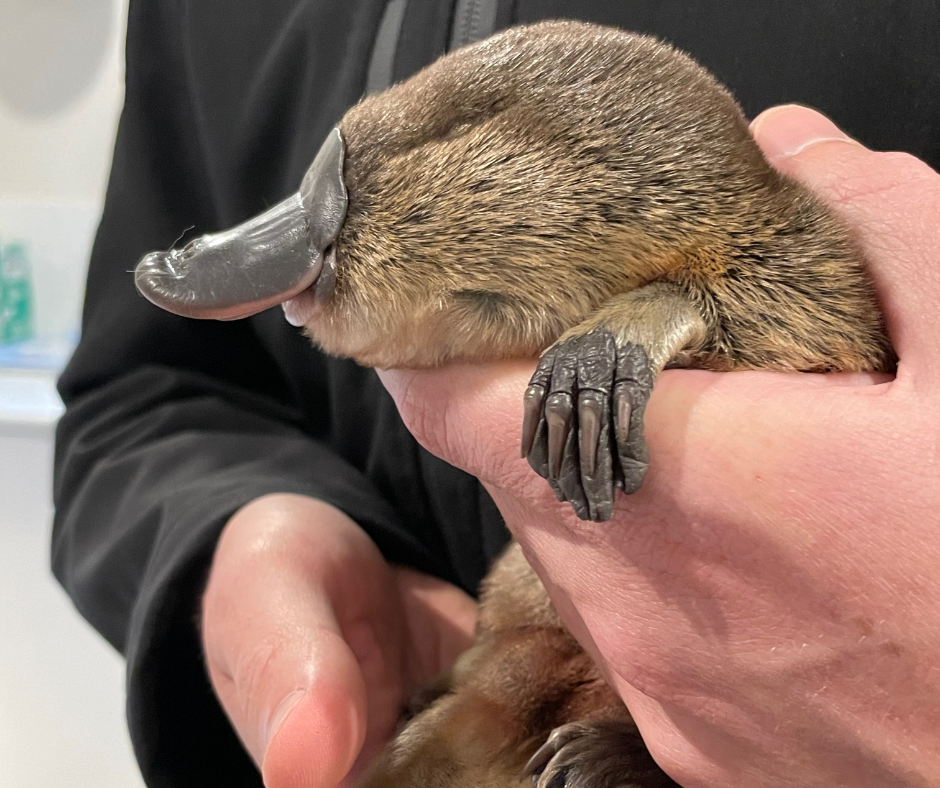
Their future belongs in the wild
Construction started in November. The foundation is about to be poured, but we're still $75,000 short of what’s needed to finish and equip our hospital, to a minimum operating level.
Your kind and generous support will help us care for native wildlife like [patient name].
[need to a two or three sentences from a verified patient story: why they needed care, what helped, and their known outcome or current progress.]
We need your help now to close that gap and create the treatment and recovery spaces that will support this care.
This Christmas, your gift can help native wildlife through injury, recovery and contribute to a lasting resource for the generations who will continue caring for them.
BUSINESS SPONSORSHIPS
Help build it with us
Local businesses can leave a lasting mark on this hospital. Partner with us through cash sponsorship or in-kind support: building materials, equipment, labour or professional services.
Your business can help create the facilities needed to care for native wildlife for years to come, and be part of the story of every animal that walks, hops or flies back to the wild. It’s a project your community can see and be proud of.
As construction has started, support for the build and fit-out is especially valuable right now!!
We would welcome a conversation about what matters to your business and how we could work together. That includes how we can recognise your contribution, share your generosity through our website and campaign communications, and help you tell the story of the wildlife care your support makes possible.
Together, we can create a partnership that benefits native wildlife and gives your team and customers something to feel proud of.
LOOKING AHEAD · FUTURE CAMPUS VISION
A future for wildlife everyone can help create
Our work began in 2023, with free veterinary care for native wildlife in spaces shared with Forth Valley Vet Clinic. Our longer-term vision is the Tasmania Wildlife Health Conservation Campus: a place that brings our caring community together. Carers, rescuers, volunteers, vets, students, researchers and families, sharing what they know and working side by side for native wildlife, and for the generations who will care for them next.
Our ambition is bold: a campus where injured wildlife regain their strength in purpose-built rehabilitation facilities, children and families discover the native animals around them, future vets train alongside our team, and researchers uncover better ways to treat wildlife and protect Tasmania's threatened species.
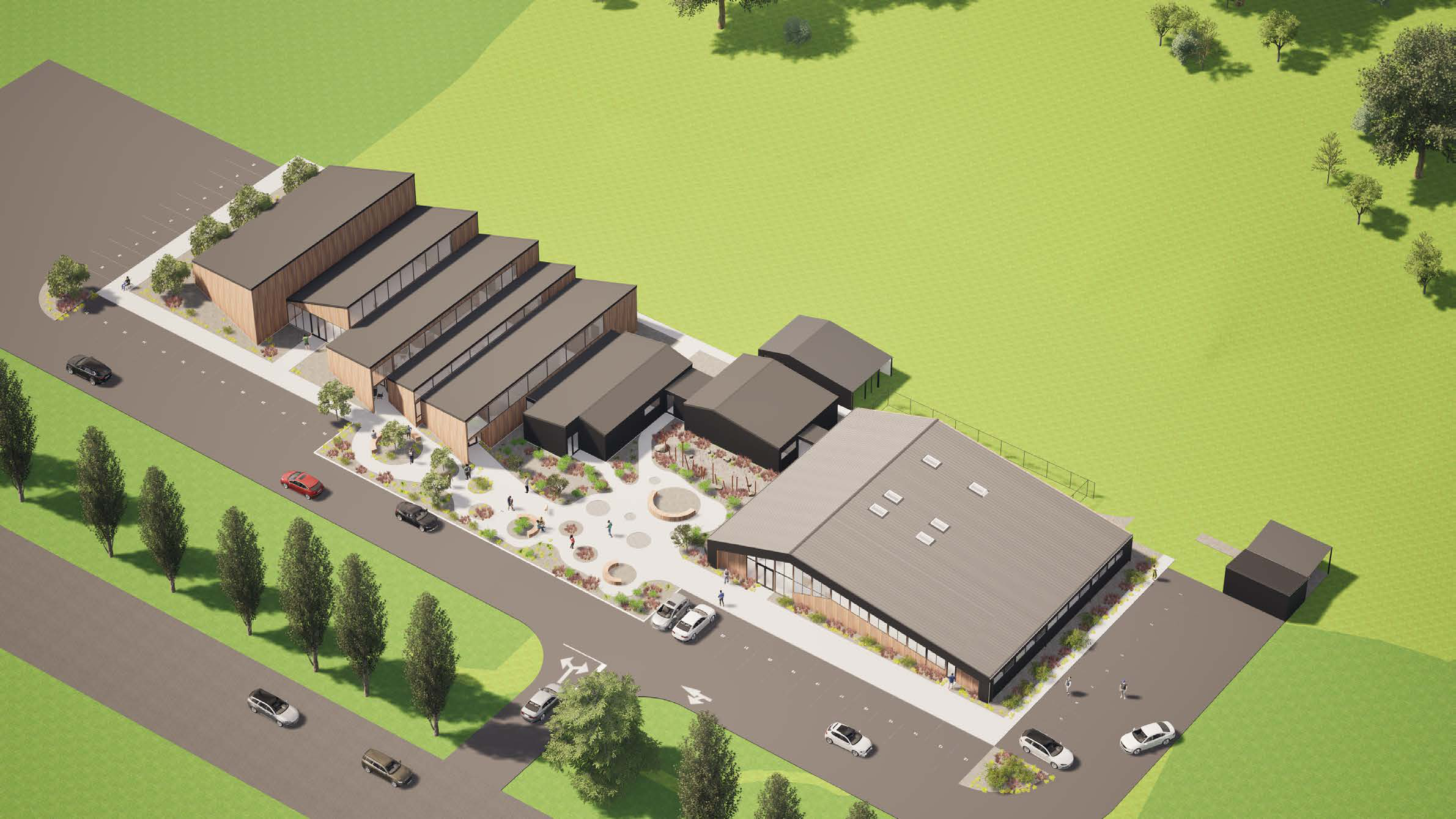
Future campus concept. This wider vision includes facilities beyond the current dedicated wildlife hospital build. Further stages depend on partnerships and funding.
-
Over time, we hope to provide further rehabilitation facilities and shared spaces where wildlife carers, rescue organisations and volunteers can learn and collaborate. Each brings experience and knowledge that others can learn from. The campus would provide a place to strengthen those connections and help support the amazing work happening across our wider wildlife, conservation and scientific community.
Children, families and schools could discover more about the native wildlife around them, meet the people contributing to their care and learn how they can play a part in protecting their future.
Educational partnerships could welcome future veterinary professionals to learn here, with veterinary students gaining experience caring for both native wildlife and domestic animals alongside Forth Valley Vet Clinic. Those experiences could help them carry an understanding of wildlife care into the communities they go on to serve.
Collaboration with researchers, government and conservation organisations could deepen our collective understanding of wildlife injury, disease and recovery. Together with our community, we could use that knowledge to help improve veterinary treatment and wildlife rehabilitation, and contribute to the protection of threatened species in Tasmania.
It is a big vision, and an ambitious one for our young charity. Achieving it will take significant community collaboration and support, partnerships with other organisations and funding from many sources. Every organisation and person involved will bring something valuable, and the campus will grow through what we can achieve together.
The future our wildlife deserves is one we can help shape together, and that starts with the decisions we make today. By dreaming big, planning ahead and bringing people together, we hope to be part of creating lasting opportunities to care for native wildlife, deepen our knowledge and pass that commitment on to future generations.
The dedicated wildlife hospital and imaging suite are our next step towards that future.
What we establish together today can give future generations a place to learn, care for native wildlife and continue the work we have started.
OUR SUPPORTERS · OUR THANKS
Thank you for helping us get here
Our wildlife service has grown through the generosity, expertise and commitment of many people and organisations.
MAKING THE HOSPITAL BUILD POSSIBLE
DasyDax Trust
A generous donation from DasyDax Trust has funded a significant part of our new dedicated wildlife hospital building.
This kindness and support is helping create a lasting place of care for sick and injured native wildlife, for our community and for generations to come.
OUR FOUNDING CHARITY PARTNER

Forth Valley Vet Clinic
Forth Valley Vet Clinic helped establish Tasmania Wildlife Hospital and continues to support our work through its veterinary team, shared facilities, equipment and expertise and cash sponsorships.
It is only through their generosity our charity has been able to provide free veterinary care for native wildlife since 2023 and continues to support the service our community is helping grow.
With thanks to TasNetworks
As a founding partner of our Raptor Rehabilitation program, TasNetworks supports the care and rehabilitation of birds of prey and continues to support our wildlife hospital.

To our volunteers, wildlife carers, rescuers, donors and everyone who shares our care for Tasmania’s wildlife: thank you.
Your contribution is helping create something our community can carry forward for generations.
